
If users see a 404 error or get redirected when trying to reset their password after you changed the lost password path in WP Ghost, the custom path isn’t resolving correctly or cached pages still point to the old path.
Clear all caches
The login page is often cached with the old lost password URL. Clear your WordPress cache plugin, CDN cache, and browser cache. Then visit the login page in an incognito window and check that the “Lost your password?” link points to your custom path, not the default.
Run the Frontend Test
Go to WP Ghost > Change Paths and click the Frontend Test button. If the test fails for the lost password path, your server’s rewrite rules aren’t handling it. Follow the configuration instructions shown for your server type.

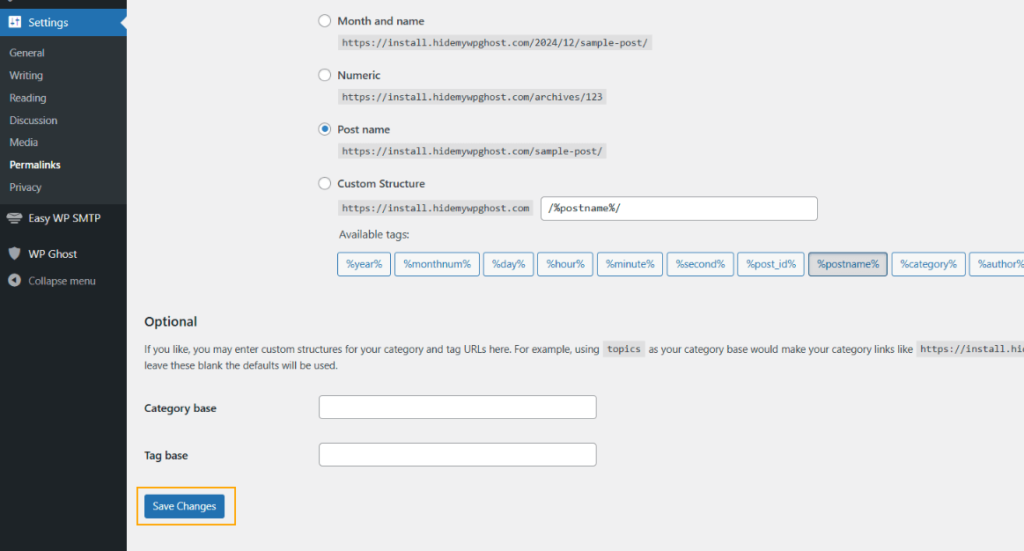
Flush permalink settings
Go to Settings > Permalinks and click Save Changes without modifying anything. This regenerates WordPress’s rewrite rules, which can fix path routing issues.
Check for typos in the custom path
Go to WP Ghost > Change Paths > Login Security and review the custom lost password path for typos, spaces, or special characters. Test the path directly in your browser: yourdomain.com/your-custom-lost-password-path. You should see the password reset form, not a 404.
Revert to the default path
If the issue persists, go to WP Ghost > Change Paths > Login Security, clear the Custom Lost Password Path field, and save. This restores the default WordPress password reset path. If reset works again with the default path, the issue is server rewrite rules not handling the custom path.

Check for login plugin conflicts
Plugins that customize the login page or password reset flow (custom login plugins, membership plugins, security plugins with their own login features) can override WP Ghost’s custom path. Temporarily deactivate login-related plugins and test the password reset. If it works, the conflicting plugin is overriding the lost password URL.
If you’ve lost access to the admin dashboard, see the emergency disable guide.